
Hyundai Motor Group has made its autonomous-driving roadmap much more concrete. At its September 2026 Autonomous Driving Media Day, the Group demonstrated a system it calls Level 2++, confirmed a dual-track strategy built around NVIDIA and its own Atria AI, and set production targets stretching from 2028 into 2029.
Level 2++ Is the Bridge Between Today’s ADAS and Hyundai’s Level 4 Ambition
The near-term plan uses NVIDIA technology to get advanced driver assistance into production faster. The long-term plan is to internalize the intelligence through Hyundai Motor Group and 42dot’s proprietary Atria AI.
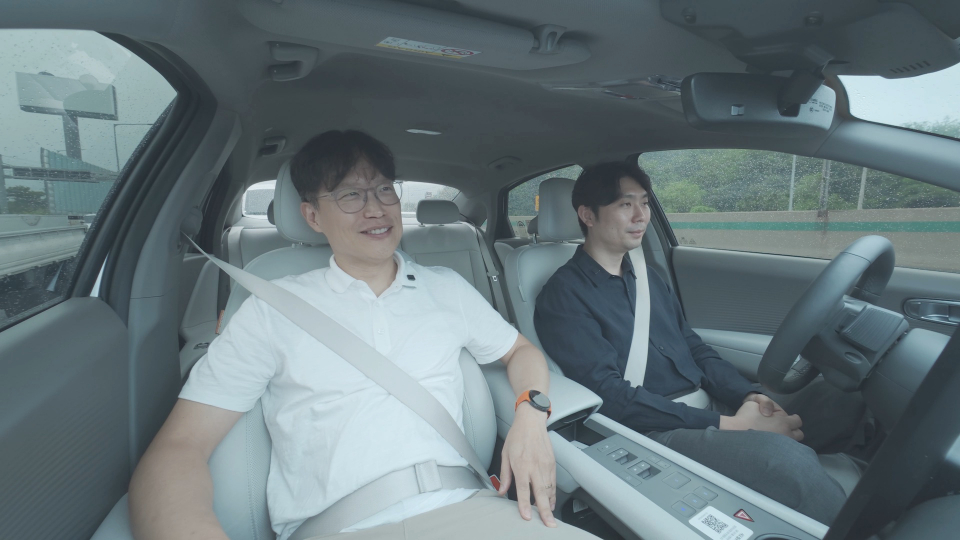
What Hyundai Actually Announced
On September 13, 2026, Hyundai Motor Group said its autonomous-driving Data Flywheel had entered full operation. The Group used the event to show an Atria AI-equipped software-defined vehicle testbed driving through complex urban traffic with what Hyundai describes as Level 2++ capability.
The bigger announcement was the production roadmap. Hyundai is pursuing two parallel tracks:
| Track | Technology | Production Target | Strategic Purpose |
|---|---|---|---|
| Track 1 | NVIDIA autonomous-driving platform + Hyundai SDV architecture | Level 2+ in H1 2028; Level 2++ in H2 2028 | Accelerate deployment using a validated external AI/compute ecosystem |
| Track 2 | Hyundai Motor Group + 42dot Atria AI | Atria AI Level 2++ vehicles in H2 2029 | Build proprietary end-to-end driving intelligence and long-term technology independence |
The Hyundai Autonomous-Driving Timeline
Data collection and pilot deployment in Korea; Data Flywheel moves into full operation.
First production target for the new NVIDIA-based advanced driver-assistance architecture.
More capable production system targeted later in the same year.
Hyundai/42dot’s proprietary AI is targeted for production vehicles.
What Does “Level 2++” Mean?
This is the most important part of the announcement — and also the easiest to misunderstand.
Level 2++ is not a separate SAE automation level. SAE J3016 defines Levels 0 through 5. In the official framework, Level 2 means the system can assist with both steering and acceleration/braking at the same time, while the human driver remains responsible for monitoring the road and driving environment.
Hyundai is using “Level 2++” as an engineering/product capability label for a more advanced supervised system. The “++” should therefore be read as more capable Level 2-class assistance, not as an official step halfway to Level 3.
Why NVIDIA Is the Short-Term Accelerator
Hyundai Motor Group expanded its NVIDIA partnership in March 2026. The collaboration uses NVIDIA DRIVE Hyperion as a common autonomous-driving foundation and combines Hyundai’s software-defined vehicle architecture with NVIDIA compute, sensor reference architecture and autonomous-driving software.
For Hyundai, the value is speed. Instead of waiting until every layer of its proprietary AI stack is mature, the company can launch advanced capability earlier using a validated external ecosystem — while still collecting data that improves its own technology.
What DRIVE Hyperion 10 Brings
NVIDIA’s current DRIVE Hyperion 10 reference architecture is designed to scale from Level 2 ADAS through Level 4 autonomy. NVIDIA lists two DRIVE AGX Thor SoCs and a reference sensor suite that can include 14 cameras, 9 radars, 1 lidar, 12 ultrasonic sensors, 4 interior cameras and an exterior microphone array.
Atria AI: Hyundai’s Long-Term Bet
The second track is strategically more important. Atria AI is Hyundai Motor Group and 42dot’s proprietary end-to-end autonomous-driving system.
Instead of treating perception, planning and control as completely separate hand-coded modules, end-to-end AI increasingly learns the relationship between what the vehicle sees and how it should act. Hyundai is also developing Vision-Language-Action technology, which aims to give the system a richer understanding of complex scenes and driving intent.
Hyundai says Atria AI will reach Level 2++ production vehicles in the second half of 2029, followed by a phased expansion of capability using data generated by real production vehicles.
The Data Flywheel Is the Core of the Strategy
Hyundai’s roadmap is really a data strategy disguised as an ADAS roadmap.
Collect → Train → Validate → Deploy → Collect Again
Hyundai Motor and Kia sell more than seven million vehicles annually across roughly 190 countries and regions. Hyundai says it also operates around 40 dedicated data-collection vehicles continuously to capture construction zones, severe weather, abrupt lane changes, narrow streets and other edge cases.
That scale is the potential advantage. A strong autonomous-driving model improves when it repeatedly sees rare, difficult situations — not just clean highway driving.
Why Sensor Standardization Matters
Hyundai wants Hyundai Motor, Kia, 42dot and Motional to move toward a more consistent sensor and compute architecture around NVIDIA DRIVE Hyperion 10.
That matters because fragmented hardware makes AI development harder. If every model sees the world through different camera placements, radar coverage and compute constraints, training and validation become more complicated. A more standardized architecture makes fleet data easier to combine and models easier to improve across brands.
Hyundai Level 2++ vs Today’s Advanced Driver-Assistance Systems
Hyundai has not yet published final consumer feature lists for the 2028 production Level 2++ system, so it would be premature to claim exact lane-change, urban-driving or hands-free capabilities.
Still, the strategic direction is clear: Hyundai wants to move from today’s rule-based and feature-specific ADAS toward AI-driven, data-learned driving behavior that can deal with more complex scenarios.
| System Type | Main Character | Driver Role |
|---|---|---|
| Traditional Level 2 ADAS | Lane centering + adaptive cruise + feature-specific logic | Driver continuously monitors |
| Hyundai Level 2+ | More advanced AI-assisted driving with broader capability | Still supervised unless production rules state otherwise |
| Hyundai Level 2++ | Higher-capability supervised AI system; testbed already shown in complex urban traffic | Do not assume Level 3-style eyes-off operation |
| Level 4 goal | Automated driving within defined conditions without human fallback during operation | System performs driving task within its operational domain |
Where Motional Fits In
Hyundai’s consumer Level 2+/2++ roadmap is only one side of the autonomy program. Through Motional, the Group is also working on Level 4 robotaxi technology.
The March 2026 Hyundai-NVIDIA partnership explicitly included discussion of NVIDIA technology for Motional’s Level 4 robotaxi development. This creates an unusual development ladder: consumer vehicles generate scalable supervised-driving data, while Motional continues working on higher-automation commercial services.
The 2029 AI Infrastructure Piece
Hyundai also plans to bring a 100-megawatt Saemangeum AI Data Center online from 2029, with capacity for more than 50,000 GPUs. The timing aligns with the expected growth in autonomous-driving data and the planned production rollout of Atria AI.
This matters because modern end-to-end driving AI is not just a vehicle-software problem. It requires huge offline training, simulation and validation infrastructure.
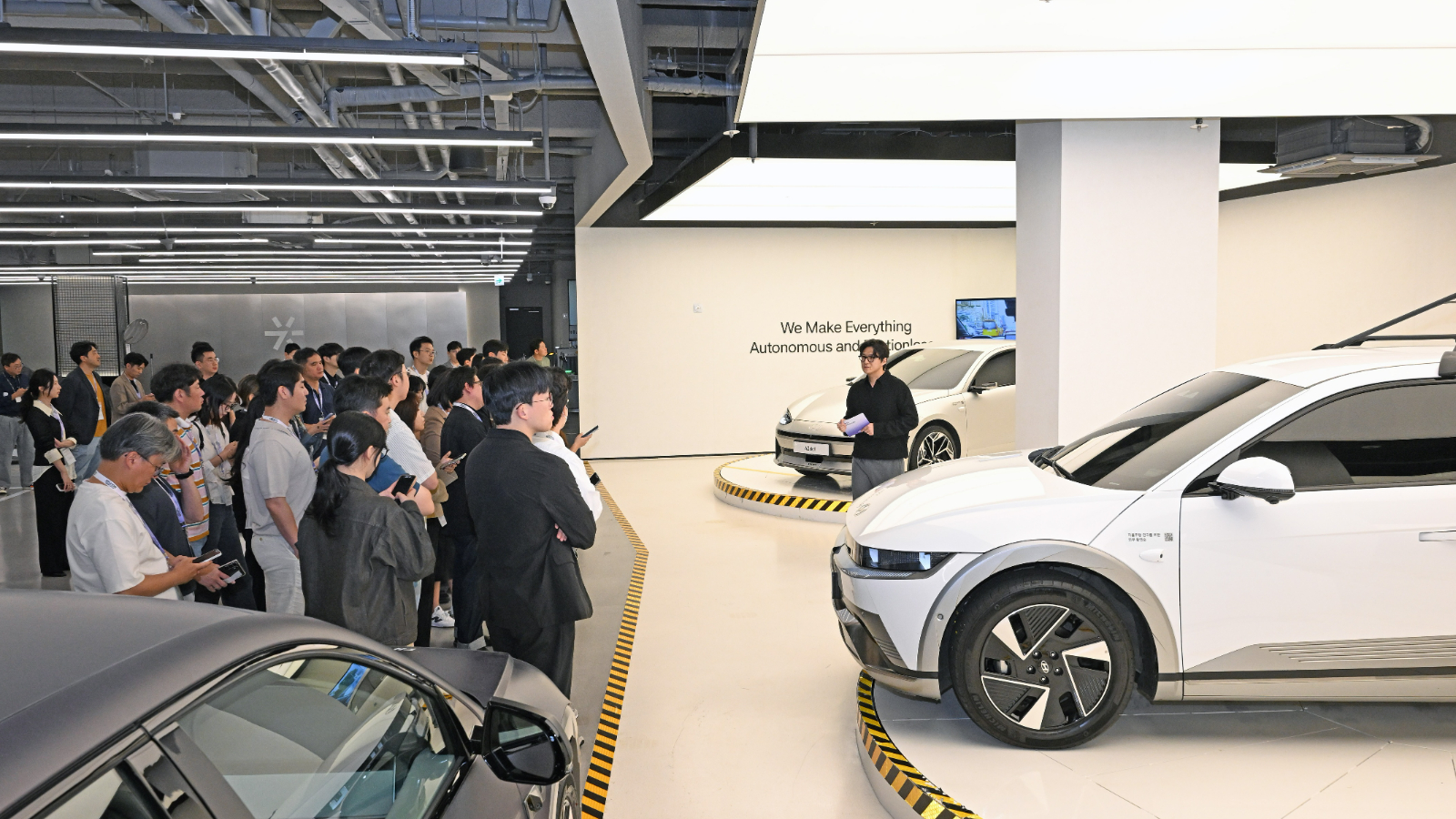
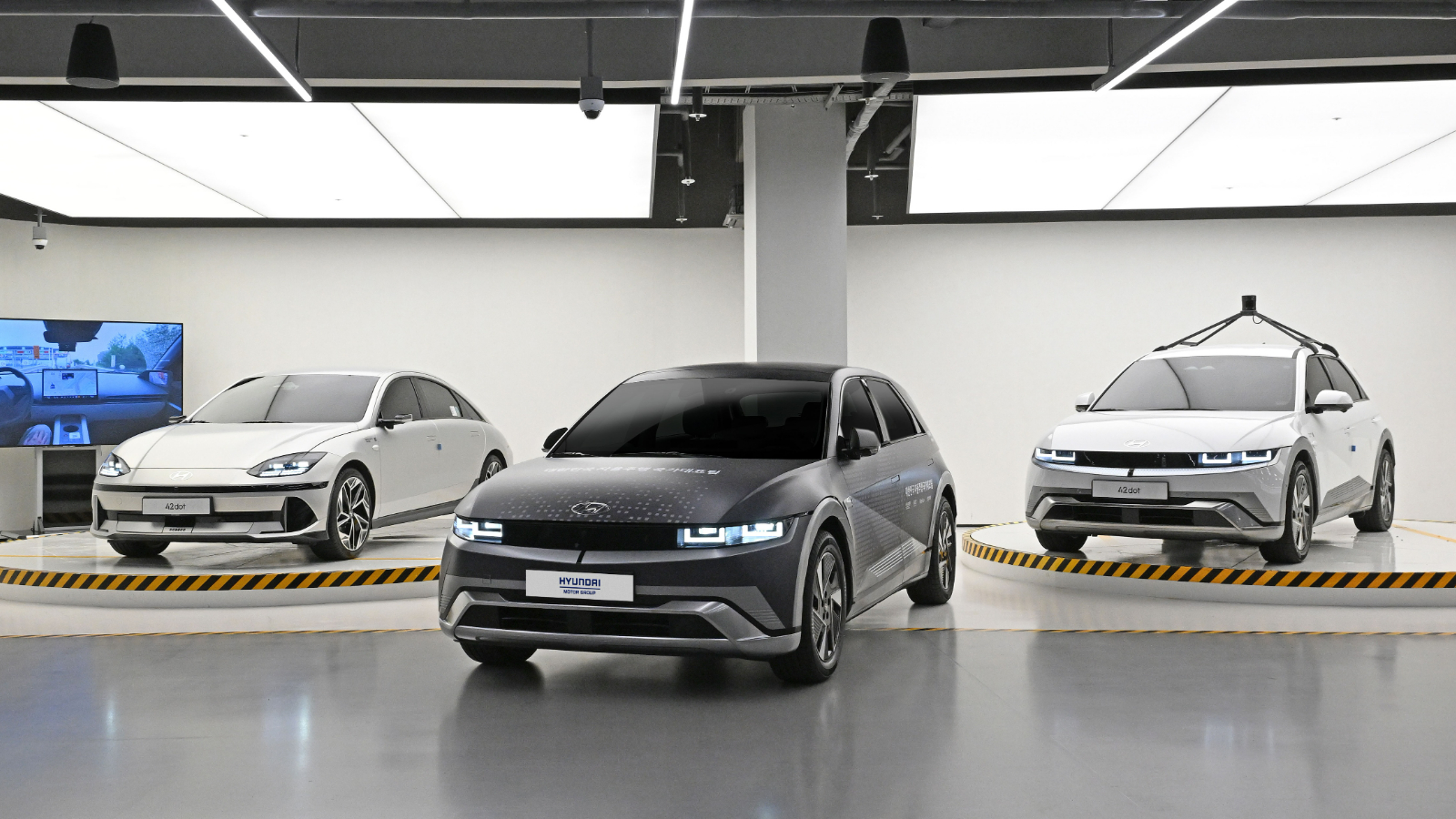
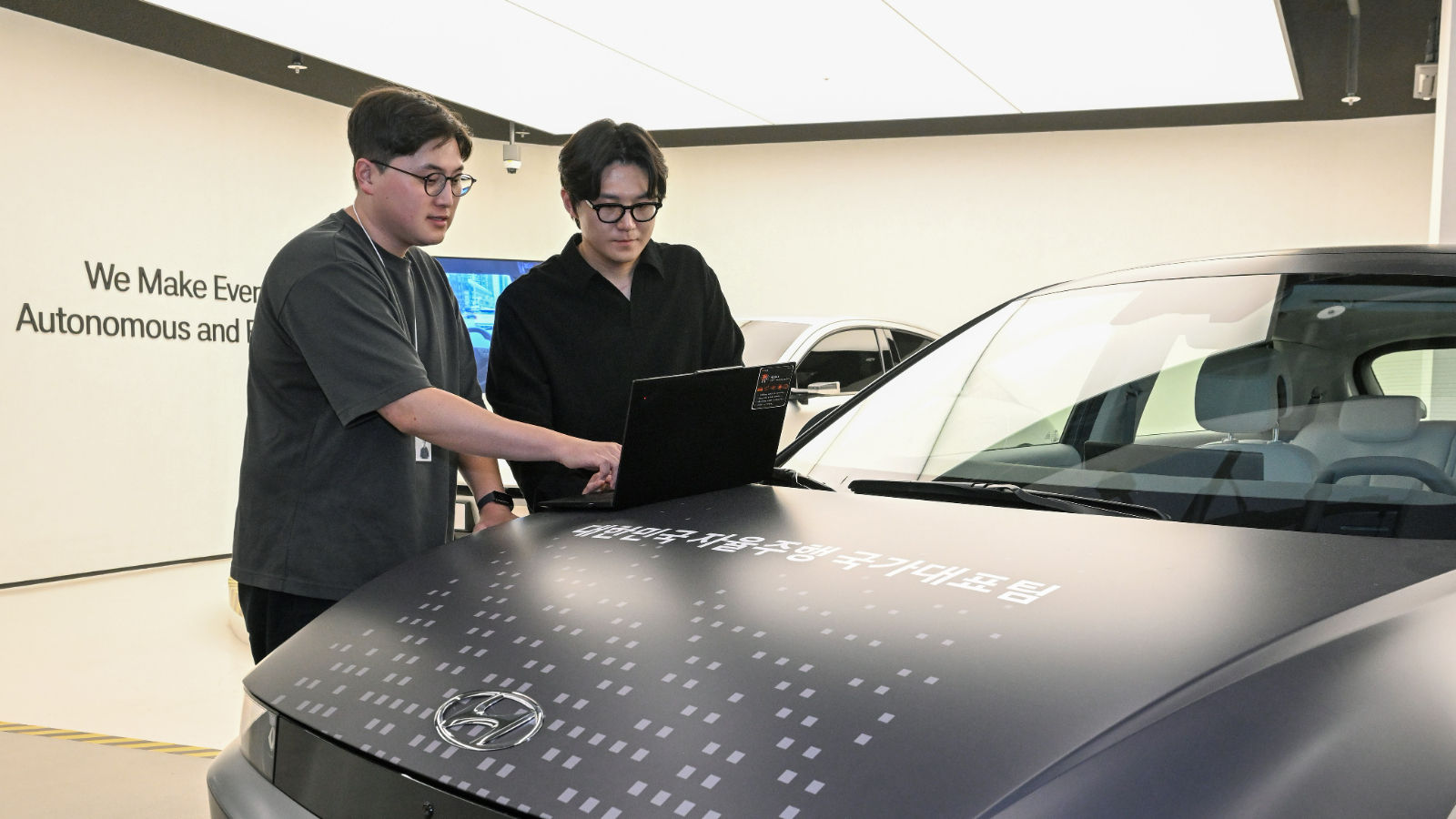
Official Hyundai Roadmap Gallery
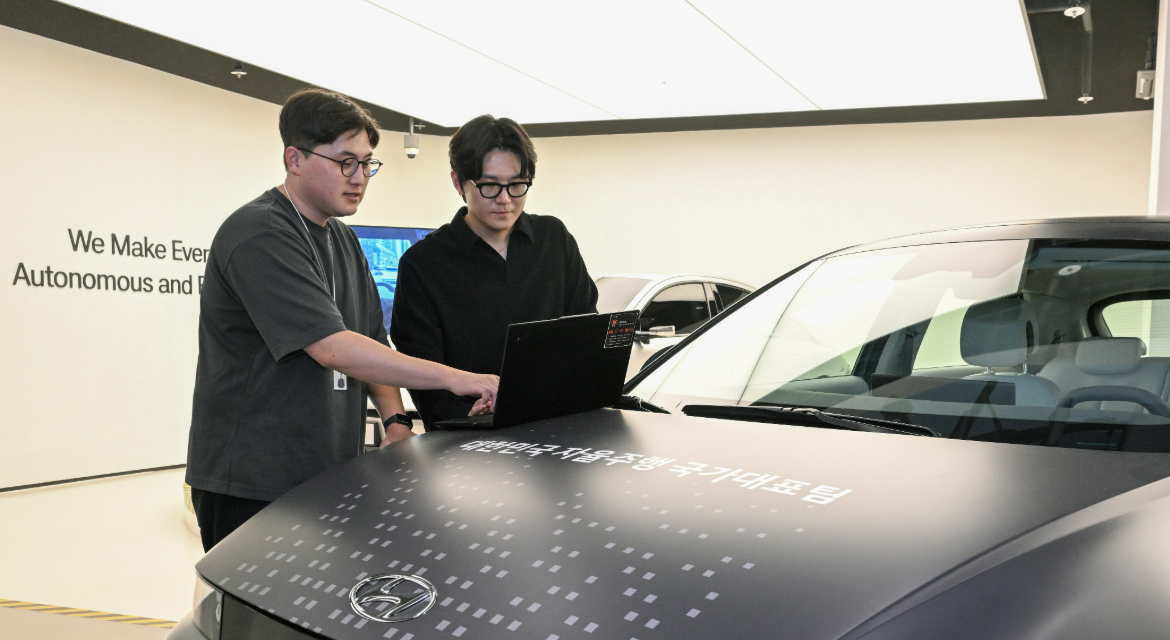
What This Means for Hyundai and Kia Buyers
For shoppers today, this roadmap does not mean a 2026 Hyundai will suddenly become Level 2++ through an over-the-air update. The production systems are targeted for future SDV-generation vehicles beginning in 2028.
What it does mean is that upcoming Hyundai and Kia models are likely to be designed with much tighter integration between sensors, compute, software and OTA updates. Over time, that should make ADAS less dependent on one-time hardware generations and more capable of improving through software.
What We Still Do Not Know
- Which specific Hyundai, Kia or Genesis model will be the first Level 2++ production vehicle.
- Whether the production system will be hands-on, hands-off or market-dependent.
- The final sensor count and exact Hyperion 10 hardware configuration on customer vehicles.
- Pricing or subscription structure.
- Which countries will receive the technology first.
- Whether Level 2++ capability will be identical across Hyundai, Kia and Genesis.
Until Hyundai answers those questions, any claim that a specific future model will be “self-driving” would be speculation.
DriveSpecLab Verdict
Hyundai’s Level 2++ announcement is more important than the name suggests. The real story is the architecture behind it: NVIDIA for faster near-term deployment, Atria AI for long-term independence, standardized sensors across the Group and a Data Flywheel designed to turn millions of real-world miles into continuously improving software.
Level 2++ should not be mistaken for Level 3 autonomy. But if Hyundai can execute the 2028–2029 roadmap, the Group could move from being a strong ADAS follower to one of the industry’s most serious data-driven autonomous-driving competitors.
Frequently Asked Questions
What is Hyundai Level 2++?
Hyundai uses Level 2++ to describe a higher-capability supervised autonomous-driving system. It is not a separate SAE automation level; SAE formally defines Levels 0 through 5.
When will Hyundai Level 2++ reach production?
Hyundai Motor Group targets an NVIDIA-based Level 2++ production vehicle for the second half of 2028, followed by Atria AI-powered Level 2++ vehicles in the second half of 2029.
When does Hyundai Level 2+ arrive?
The latest September 2026 roadmap targets NVIDIA-based Level 2+ production vehicles for the first half of 2028.
Is Level 2++ the same as Level 3?
No. Level 2++ is not part of the SAE J3016 formal level structure. Buyers should not assume eyes-off Level 3 behavior unless Hyundai explicitly certifies and describes a production system that way.
What is Atria AI?
Atria AI is Hyundai Motor Group and 42dot’s proprietary end-to-end autonomous-driving AI system. Hyundai targets Atria AI-powered Level 2++ production vehicles for the second half of 2029.
What is NVIDIA DRIVE Hyperion 10?
It is NVIDIA’s latest reference architecture for advanced driver assistance and autonomous driving. It combines DRIVE AGX Thor compute with a standardized sensor architecture and is designed to scale from Level 2 through Level 4 applications.
Will current Hyundai cars get Level 2++ by software update?
Hyundai has not announced that. The current roadmap refers to future production vehicles and new SDV architecture, so owners should not assume existing hardware will be upgraded to Level 2++.
Official Sources
- Hyundai Motor Group — Autonomous Driving Media Day & Level 2++ Roadmap, September 13, 2026
- Hyundai Motor, Kia & NVIDIA — Expanded Autonomous Driving Partnership, March 2026
- NVIDIA — DRIVE Hyperion Platform & Hyperion 10 Reference Architecture
- NHTSA — Driver Assistance Technologies & Level 2 Responsibilities
- SAE International — J3016 Driving Automation Taxonomy
Editorial note: Hyundai’s roadmap contains future production targets, not guaranteed launch dates. Capabilities, hardware, regulatory approvals, supported roads and driver-monitoring requirements can change before commercial release.
